Paris in the early 1940s was a city wrapped in uncertainty. War had quieted its boulevards, yet beneath the silence, art, music, and cinema still breathed. In that atmosphere of resilience and creativity, a child named Catherine Fabienne Dorléac entered the world in 1943. Few could have predicted that this quiet girl from a family of actors would grow into one of the most celebrated faces in international cinema.
Over the decades, Catherine Deneuve would become more than an actress. She would evolve into a cultural symbol—an embodiment of French elegance, cinematic depth, and enduring artistry.

A Childhood Shaped by Cinema and Creativity
Growing up in a household where film sets and scripts were part of everyday life naturally shaped Deneuve’s future. Her parents were both actors, and the world of storytelling surrounded her from the very beginning. Instead of playground chatter about ordinary dreams, conversations in her home often revolved around rehearsals, performances, and the magic of the camera.
It was almost inevitable that she would step in front of the lens herself.
As a teenager, Deneuve began exploring small roles in French films. Her debut came at just thirteen years old in Les Collégiennes (1957). Though the part was minor, something about her presence immediately stood out. She had a quiet magnetism—a subtle combination of poise, mystery, and emotional depth that drew attention without demanding it.
That early appearance planted a seed. Soon, filmmakers began to notice the young performer whose calm confidence suggested something far bigger on the horizon.
The Breakthrough That Changed Everything
Every legendary career has a moment when everything shifts. For Catherine Deneuve, that moment arrived in 1964 with The Umbrellas of Cherbourg.
This film wasn’t just another romantic story—it was a bold musical experiment where every line of dialogue was sung rather than spoken. The unusual format could easily have overshadowed the actors, yet Deneuve’s performance as Geneviève became the heart of the film.
Her portrayal captured the bittersweet emotions of young love—hope, longing, and the quiet ache of separation. Audiences across Europe and beyond were captivated. Suddenly, Catherine Deneuve was no longer simply a promising actress. She was an international star.
The film’s colorful visuals, rain-soaked streets, and melodic storytelling paired perfectly with her luminous screen presence. Critics praised her ability to communicate complex feelings through subtle expressions, proving that sometimes a glance can say more than pages of dialogue.
Exploring Darker and More Complex Roles
Success often tempts performers to repeat what works. Deneuve chose a different path. Instead of staying within the safe boundaries of romantic roles, she began exploring characters layered with psychological depth.
In 1965, she collaborated with director Roman Polanski on Repulsion. The film presented a chilling psychological portrait of isolation and fear. Deneuve’s performance showed a completely different side of her talent—fragile, intense, and hauntingly quiet.

What made her portrayal so compelling was its restraint. She didn’t rely on dramatic outbursts or exaggerated emotion. Instead, she conveyed tension through silence, stillness, and subtle changes in expression.
Then came another pivotal film: Belle de Jour (1967), directed by Luis Buñuel. In this daring story, Deneuve portrayed Séverine, a seemingly reserved housewife navigating secret emotional conflicts. The role required incredible nuance, balancing innocence, curiosity, and inner turmoil.
With these performances, Deneuve established herself as an actress unafraid of complexity. She could embody elegance and vulnerability at the same time—like a mirror reflecting both light and shadow.
A Career Filled with Cinematic Milestones
As the decades passed, Catherine Deneuve continued to reinvent herself. Many actors shine brightly for a moment and fade. Deneuve, however, built a career that stretched across generations.
One of her most acclaimed performances arrived in The Last Metro (1980), directed by François Truffaut. In the film, she portrayed a theater owner determined to keep artistic expression alive during the German occupation of France. The role resonated deeply with audiences and critics alike, earning her one of France’s prestigious César Awards.
Years later, she delivered another powerful performance in Indochine (1992). Set against the backdrop of colonial Southeast Asia, the film blended political drama with personal storytelling. Deneuve played a plantation owner navigating complex emotional and historical tensions.
Her performance carried the film with quiet authority and earned her an Academy Award nomination. Once again, she proved that subtlety could be just as powerful as spectacle.
A Style Icon Beyond the Silver Screen
While Catherine Deneuve’s acting achievements are remarkable, her influence extends far beyond film.
Throughout the 1960s and 1970s, she became a defining figure of European elegance. Designers admired her natural sophistication—effortless yet refined. One designer in particular formed a lasting creative partnership with her: Yves Saint Laurent.
Saint Laurent often described Deneuve as the perfect embodiment of his aesthetic vision. She wore his designs both on screen and in everyday life, helping shape the image of modern Parisian chic.
Her association with luxury fashion houses like Chanel further strengthened her reputation as a timeless style icon. Advertisements featuring her calm, luminous presence captured an era of classic glamour that still resonates today.
Balancing Fame with Personal Life
Despite global recognition, Catherine Deneuve has always maintained a certain distance from public scrutiny. Her private life, while occasionally discussed in the media, remained largely under her control.
She is the mother of two children: Christian, whose father is filmmaker Roger Vadim, and Chiara, whose father is the legendary Italian actor Marcello Mastroianni. Both relationships connected her to influential figures in European cinema, yet she always carved her own path rather than living in anyone’s shadow.
Life, of course, brought both joy and sorrow. The loss of her sister Françoise deeply affected her, adding emotional depth to the roles she would later portray. Experiences like these often shape artists in profound ways, giving their performances authenticity that audiences instinctively recognize.
An Enduring Influence on Modern Cinema
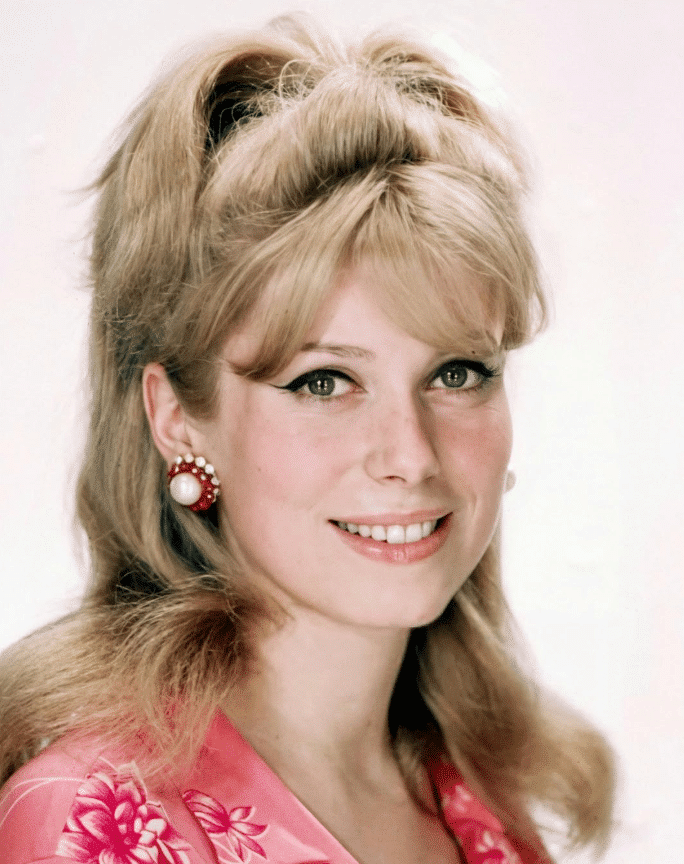
Even after more than half a century in the industry, Catherine Deneuve continues to inspire filmmakers and performers around the world.
Her filmography now includes more than 130 titles—an astonishing achievement that reflects both dedication and artistic curiosity. Unlike many performers who gradually withdraw from challenging roles, Deneuve has consistently embraced new creative opportunities.
Whether appearing in independent productions or major international films, she brings the same calm intensity that first captivated audiences decades ago.
Younger actors often cite her as an inspiration—not only for her talent but also for her longevity. In a profession where fame can vanish overnight, her career demonstrates the power of authenticity, discipline, and artistic courage.
A Legacy That Transcends Generations
Think of cinema as a grand gallery filled with portraits of unforgettable figures. Some shine brightly for a moment before fading into history. Others remain vivid for generations, their influence echoing long after their earliest performances.
Catherine Deneuve belongs firmly in the latter category.
Her journey—from a child growing up among actors to one of the most recognizable faces in world cinema—illustrates the power of quiet determination. She never relied on spectacle or controversy. Instead, she built her legacy through thoughtful choices, nuanced performances, and an unmistakable presence.
Conclusion: The Enduring Elegance of Catherine Deneuve

Catherine Deneuve’s story is more than the biography of a film star. It is a testament to artistic longevity and timeless elegance.
From the postwar streets of Paris to international film festivals, she has carried the spirit of French cinema across generations. Her performances reveal layers of emotion that feel both intimate and universal, proving that great storytelling transcends language and culture.
Today, decades after her earliest roles, she remains a symbol of sophistication, resilience, and creative passion. And that is perhaps the greatest measure of her legacy: Catherine Deneuve is not simply a figure from the past—she continues to illuminate the present and inspire the future of cinema.